I was doing some research on rites of passage and how they work when i came across some info that really brought some things together. A rite of passage is a ceremony or test that brings a person from one stage of life to another. For our sake, and as is most commonly seen. The rite of passage refers to the time at which a child becomes an adult. They go from living a life of very limited responsibility and training to being considered and treated as an adult. That includes taking on the rights and responsibilities of adults. It is something that has been lost quite possibly to the detriment of youth and our society.
It's interesting looking at these rites of passage and how they work. There are actually three very important parts (or stages) to a rite of passage. Each part has and holds a purpose that helps to give meaning to and define the process:
1) The first stage is the abandonment stage. It is a matter of leaving the old behind. Childhood is removed like an old robe or as an old shell abandoned by a hermit crab who has grown too big to fit into it anymore. It is the point at which a child recognizes that they are no longer to be a child. They are abandoning their childhood in an attempt to become more. To become an adult.
2) Next is the separation stage. The separation stage is about training, testing, & trials. It is the part of the process in which the youth proves that they are ready for the decision that has been made. These could be through physical, mental, and/or psychological trials. These things could be merely an expression of a decision made, or they could be actual real trials that the young person is required to fulfill in order to be allowed to pass on to the next stage.
3) The last stage of this process is the reintroduction into the social structure of the group. The child is no more. There is some sort of ceremony or ritual and the child becomes an adult with adult status. The group accepts them back as their own and they are now treated as adults and expected to act that way.
When i was doing this research i was fascinated by this because of how much it parallels baptism, which in turn parallels Christ's crucifixion process. As i have stated before, repentance, water baptism, and baptism in the Holy Spirit all include these same features. They are death and burial of the old self, a cleansing or work being done, and rebirth in a new form or as a new person. It seems that this three part process comes into play time and time again.
So, what does that mean for us? What do we do now?
Showing posts with label training. Show all posts
Showing posts with label training. Show all posts
Friday, November 02, 2007


Saturday, October 27, 2007
History: The Loss of the Rite of Passage
History has become a very interesting subject to me. When i was in school i wasn't that interested in it as a subject as at the time it was more about a bunch of fact that we had to memorize than anything else. As time has gone by however, that has changed. I have begun to see history a bit more, and i have begun to recognize how it applies (or has not been applied) to today's culture.
 Many things have changed in our societies over the generations, and especially in the last century & a quarter. In some instances it may be a good thing, but in many it's not so good. One of those things that i have noticed that has been lost by our society is the traditional ritual of coming of age or the rite of passage. This is a point in a person's life in which they make a transition from one stage of life to another. In this case from childhood to adulthood. It includes a ritual in which one who has been considered unable to make responsible decisions on their own and unable to be involved in the decision making process for others goes through a ritual (often through a physical, mental, or possibly academic trial) and when successful is considered an adult. They are treated like adults and expected to act as adults as well. Many times as a part of this process they are mentored by older men or women to prepare them for their expected roles as men & women, husbands & wives, workers & homemakers, etc in adulthood.
This tradition is one that appears to have become either entirely lost or simply ritualistic in nature with no real change in status or expectations for the individual coming of age. As a result it appears that with no defining line or set expectations children becoming adults may take less responsibility for their actions and have lower expectations for themselves. Added to that, the declining in the age of puberty & society's laxing of parental controls & sexual limitations creates a breeding ground for destructive lifestyles continuing through life.
Could reestablishing some of the more traditional rites of passage, with the proper mentoring & training, and placing greater and more defined expectations on those who complete it make a difference in some of these problems? Would it help to prepare our young people for adulthood? If so, what would it look like, and how could it be done? Just something to think about.
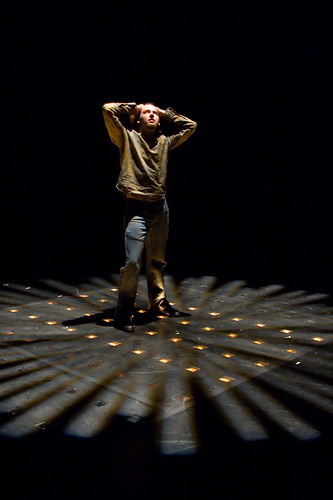
Image from ickna used under cc license.
 Many things have changed in our societies over the generations, and especially in the last century & a quarter. In some instances it may be a good thing, but in many it's not so good. One of those things that i have noticed that has been lost by our society is the traditional ritual of coming of age or the rite of passage. This is a point in a person's life in which they make a transition from one stage of life to another. In this case from childhood to adulthood. It includes a ritual in which one who has been considered unable to make responsible decisions on their own and unable to be involved in the decision making process for others goes through a ritual (often through a physical, mental, or possibly academic trial) and when successful is considered an adult. They are treated like adults and expected to act as adults as well. Many times as a part of this process they are mentored by older men or women to prepare them for their expected roles as men & women, husbands & wives, workers & homemakers, etc in adulthood.
This tradition is one that appears to have become either entirely lost or simply ritualistic in nature with no real change in status or expectations for the individual coming of age. As a result it appears that with no defining line or set expectations children becoming adults may take less responsibility for their actions and have lower expectations for themselves. Added to that, the declining in the age of puberty & society's laxing of parental controls & sexual limitations creates a breeding ground for destructive lifestyles continuing through life.
Could reestablishing some of the more traditional rites of passage, with the proper mentoring & training, and placing greater and more defined expectations on those who complete it make a difference in some of these problems? Would it help to prepare our young people for adulthood? If so, what would it look like, and how could it be done? Just something to think about.
Image from ickna used under cc license.
Subscribe to:
Posts (Atom)


 Posts
Posts

