I was doing some research on rites of passage and how they work when i came across some info that really brought some things together. A rite of passage is a ceremony or test that brings a person from one stage of life to another. For our sake, and as is most commonly seen. The rite of passage refers to the time at which a child becomes an adult. They go from living a life of very limited responsibility and training to being considered and treated as an adult. That includes taking on the rights and responsibilities of adults. It is something that has been lost quite possibly to the detriment of youth and our society.
It's interesting looking at these rites of passage and how they work. There are actually three very important parts (or stages) to a rite of passage. Each part has and holds a purpose that helps to give meaning to and define the process:
1) The first stage is the abandonment stage. It is a matter of leaving the old behind. Childhood is removed like an old robe or as an old shell abandoned by a hermit crab who has grown too big to fit into it anymore. It is the point at which a child recognizes that they are no longer to be a child. They are abandoning their childhood in an attempt to become more. To become an adult.
2) Next is the separation stage. The separation stage is about training, testing, & trials. It is the part of the process in which the youth proves that they are ready for the decision that has been made. These could be through physical, mental, and/or psychological trials. These things could be merely an expression of a decision made, or they could be actual real trials that the young person is required to fulfill in order to be allowed to pass on to the next stage.
3) The last stage of this process is the reintroduction into the social structure of the group. The child is no more. There is some sort of ceremony or ritual and the child becomes an adult with adult status. The group accepts them back as their own and they are now treated as adults and expected to act that way.
When i was doing this research i was fascinated by this because of how much it parallels baptism, which in turn parallels Christ's crucifixion process. As i have stated before, repentance, water baptism, and baptism in the Holy Spirit all include these same features. They are death and burial of the old self, a cleansing or work being done, and rebirth in a new form or as a new person. It seems that this three part process comes into play time and time again.
So, what does that mean for us? What do we do now?
Showing posts with label adult. Show all posts
Showing posts with label adult. Show all posts
Friday, November 02, 2007


Saturday, October 27, 2007
History: The Loss of the Rite of Passage
History has become a very interesting subject to me. When i was in school i wasn't that interested in it as a subject as at the time it was more about a bunch of fact that we had to memorize than anything else. As time has gone by however, that has changed. I have begun to see history a bit more, and i have begun to recognize how it applies (or has not been applied) to today's culture.
 Many things have changed in our societies over the generations, and especially in the last century & a quarter. In some instances it may be a good thing, but in many it's not so good. One of those things that i have noticed that has been lost by our society is the traditional ritual of coming of age or the rite of passage. This is a point in a person's life in which they make a transition from one stage of life to another. In this case from childhood to adulthood. It includes a ritual in which one who has been considered unable to make responsible decisions on their own and unable to be involved in the decision making process for others goes through a ritual (often through a physical, mental, or possibly academic trial) and when successful is considered an adult. They are treated like adults and expected to act as adults as well. Many times as a part of this process they are mentored by older men or women to prepare them for their expected roles as men & women, husbands & wives, workers & homemakers, etc in adulthood.
This tradition is one that appears to have become either entirely lost or simply ritualistic in nature with no real change in status or expectations for the individual coming of age. As a result it appears that with no defining line or set expectations children becoming adults may take less responsibility for their actions and have lower expectations for themselves. Added to that, the declining in the age of puberty & society's laxing of parental controls & sexual limitations creates a breeding ground for destructive lifestyles continuing through life.
Could reestablishing some of the more traditional rites of passage, with the proper mentoring & training, and placing greater and more defined expectations on those who complete it make a difference in some of these problems? Would it help to prepare our young people for adulthood? If so, what would it look like, and how could it be done? Just something to think about.
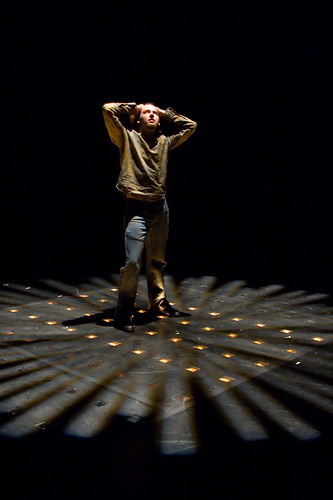
Image from ickna used under cc license.
 Many things have changed in our societies over the generations, and especially in the last century & a quarter. In some instances it may be a good thing, but in many it's not so good. One of those things that i have noticed that has been lost by our society is the traditional ritual of coming of age or the rite of passage. This is a point in a person's life in which they make a transition from one stage of life to another. In this case from childhood to adulthood. It includes a ritual in which one who has been considered unable to make responsible decisions on their own and unable to be involved in the decision making process for others goes through a ritual (often through a physical, mental, or possibly academic trial) and when successful is considered an adult. They are treated like adults and expected to act as adults as well. Many times as a part of this process they are mentored by older men or women to prepare them for their expected roles as men & women, husbands & wives, workers & homemakers, etc in adulthood.
This tradition is one that appears to have become either entirely lost or simply ritualistic in nature with no real change in status or expectations for the individual coming of age. As a result it appears that with no defining line or set expectations children becoming adults may take less responsibility for their actions and have lower expectations for themselves. Added to that, the declining in the age of puberty & society's laxing of parental controls & sexual limitations creates a breeding ground for destructive lifestyles continuing through life.
Could reestablishing some of the more traditional rites of passage, with the proper mentoring & training, and placing greater and more defined expectations on those who complete it make a difference in some of these problems? Would it help to prepare our young people for adulthood? If so, what would it look like, and how could it be done? Just something to think about.
Image from ickna used under cc license.
Friday, September 21, 2007
R-E-S-P-E-C-T
The more i look at the world, the more i shake my head wondering what has happened. I started to notice it in high-school. I was walking down the hallway between classes and there was a group kids around fourth grade going down the hallway. Suddenly, it seemed like out of the blue, one of the younger kids starts making fun of one of high-schooler. I mean he just starts reaming on him, swearing at him, insulting him, and going on & on. From as far as i could tell the fourth grader wasn't mad at the other guy. He was just saying what he was because he knew he could get away with it, and getting away with it he was. The high-schooler starts acting like he's going to pummel the fourth grader and the fourth grader tells him that he's not afraid of him and that if he touches him he will sue him. The kid's teacher was nowhere to be seen, and no other staff member was even paying attention, let alone cared. I couldn't believe the gall of this kid. At around that age, no one i knew in school would have even considered doing that.
It amazes me how much times have changed. When i was a kid we called all adults by their titles Mr. & Mrs. There was no first name basis. (Mind you, i am only in my twenties. This wasn't something that occurred 50 years ago) There was respect because as adults they deserved respect. They were our authority figures and we were raised to have respect for authority. Nowadays that means little to nothing. Parents and other adults tend to be on a first name basis with their kids friends. If a child is disrespectful to someone in public people tend to shrug it off and say not to worry about it because they are just kids. I have seen where an adult chastised their child for being disrespectful to someone else and the other person got mad and chastised the parent for getting upset with their child.
It almost seems like any kind of respect besides self-respect is seen an inappropriate and unfounded. Lack of respect or even disrespect is status quo unless that respect has been earned. How about the fact that not only is the person older than you (or me) and has been through more things in life than us, but that they also have to put up with our crap. I'd say that that is more than deserving of respect.
This issue falls into even more of a problem because we (including the pastors and other church leaders) don't seem to have/act out respect for God during prayer. How many times have you seen a pastor or leader praying over or with a congregation and everyone has their heads bowed and is either reverently silent or is praying as well. I'm sure that a number of you who read this will say, "Sure, it happens every week at my church". But, what about the worship team? While someone is praying, they are getting onto and off of the stage. They are getting setup or they are tearing down. Why? So that everything can flow seamlessly? So that we have the best quality show? So that all that the audience(, i mean "congregation") sees is the best? Since when is it more important to put on a good "show" than to have respect for the creator of the universe? Why is the congregations view more important than respect for the one who has taken us from our own desire for selfish darkness into the light? How can we expect our children to be respectful of those in authority when it seems like we don't have the respect we should have for the ultimate authority, God?
(I do apologize for picking on the worship team. This is something that i see throughout the entire church body and not just in this situation. It's just an easy example that crosses congregational and denominational boundaries due to its commonality.)
Image from one/million used under cc license.
Friday, July 20, 2007
Great Expectations
So, how do we develop growth and maturity in young adults? How do we nurture it and encourage it? I don't think that there is an easy answer to these questions. It's like asking a salesman how to sell something to someone. You could ask 100 different salesmen and get 100 different answers. Ultimately the core of the issue is that when a young person is encouraged to act immaturely, chances are, they will. It's like trying to teach a 3-year old how to behave. If you model, encourage, and reward good behavior, chances are you will have children that have good behavior.
When a young adult see another person acting like a mature, responsible adult putting what's best ahead of what they necessarily want, chances are they will learn from that. If a young adult sees themself as the only person that they know acting the right way, they will be more likely to become frustrated and discouraged and more likely to give up on the process. One of the key things to remember is that if a young adult is expected to act like an adult and treated like an adult they will be more willing to be that way. However if they don't know what that looks like, expectations won't mean a thing.
Image from celikins used under cc license.
Wednesday, July 04, 2007
So What's the Equation for Freedom?
It being 4th of July and all, i have been so tempted to write an article "celebrating" America's freedom. Our freedom to become slaves to media franchises with their own (not so) hidden agendas. Our freedom to work so hard that we alienate our children and place them under government care to be raised & instructed. Our freedom to allow Supreme Court Justices to make decisions for the people and legislate from the bench because of how they decide that they want to "(mis)translate" our Constitution. At this point i have already spent more time on this off subject than i had planned to.
What i really wanted to look at today deals in part with one of those previous topics. Who is really raising our kids? There was a time when most parents raised their own kids. They taught them the fundamentals, there was a school that taught students what they needed to know to succeed in life. Reading, writing, math, a little science, and some history. From there the kids would go home and learn a trade as part of a family business or farm. If they decided not to follow the family tradition, they were able to work as an apprentice in another area to develop the skills necessary to do that trade. When they hit a certain age (early to mid teens usually), they were treated as adults, expected to act that way, and did. They had everything they needed to survive, succeed, and raise a family of their own. Now, less than 150 years later our lives have "improved" to the point where in order to "succeed" and "do well" one must have at least 16 years of "formal" education, and even then people leave school with no idea as to how to do what they have been "taught" to do. Even in lower education there is so much time focused on information that will most likely never be used again. For instance, how many people really apply questions like those below to their lives or work?
Graph the equation and solve the problems below
45X^2(squared) + 15XY - 16Y^2 + 12 = 152
If X = 8 what does Y = ?
If X = -12... If X = p...
or even
What factors of 84 are also prime numbers?
So much time is spent away from home, students are expected to learn facts and equations that they will never use or need in real life only to leave school unprepared to succeed. Meanwhile, an ever widening division between them and their parents is formed.
Many times what formal education does develop is immature individuals who have no idea what it means to be adults, and who are full of tons of mostly useless information with no idea as to how to apply it. Meanwhile those who have so much to teach their children about being adults, spouses, and parents are spending more and more time away from those that need them the most.
Image from ~Darin~ used under cc license.
Subscribe to:
Posts (Atom)


 Posts
Posts

